
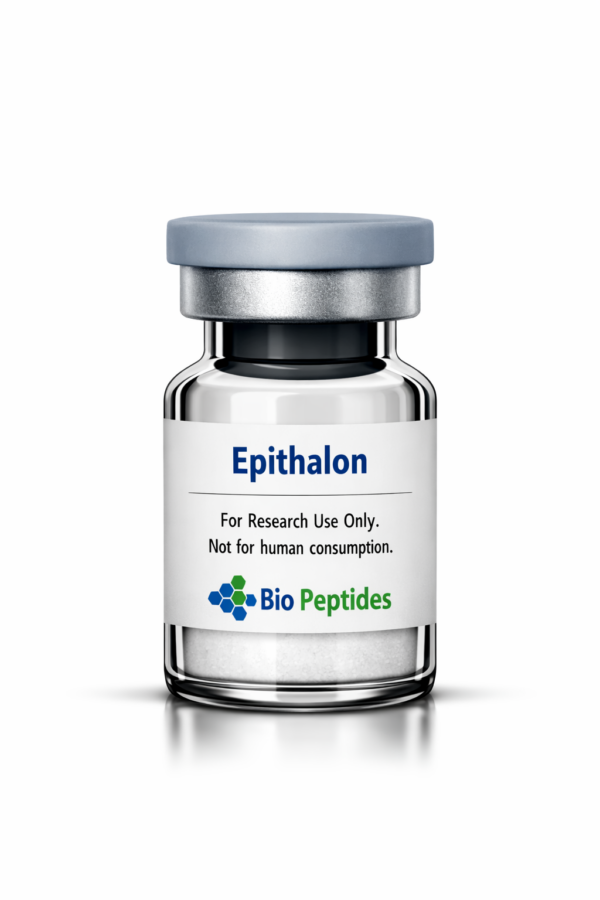
Epithalon sits at the intersection of gerontological research and clinical longevity practice. Derived from pineal gland peptide research that began in Soviet-era labs and continued into modern Russian gerontology programs, Epithalon (Ala-Glu-Asp-Gly) is among the most studied synthetic peptides for telomere maintenance and age-related decline. Pprescribed as part of structured longevity protocols under concierge physician supervision.
Epithalon is a tetrapeptide — four amino acids — modeled on the active fragment of Epithalamin, a polypeptide complex originally isolated from bovine pineal tissue. Its most studied mechanism is upregulation of telomerase, the enzyme that maintains the protective telomere caps on chromosomes. Telomere shortening is a recognized hallmark of biological aging, and compounds that preserve telomere length are of central interest in longevity medicine. Published research has documented Epithalon’s effect on telomerase activity in human cell lines.
What the Human Data Show
Long-term human data for Epithalon are limited compared with small-molecule drugs, but several cohort studies — some with more than twelve years of follow-up — have reported measurable improvements in melatonin rhythm, circadian function, glucose tolerance, and reductions in all-cause mortality among older patients. The NIH research ecosystem continues to study telomerase modulation as a longevity axis.


Reviews
There are no reviews yet.