
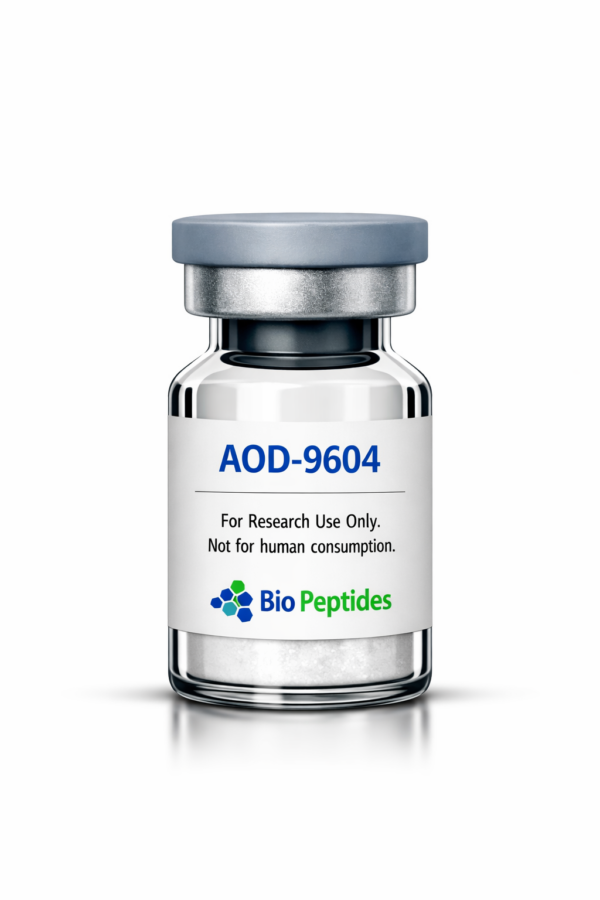
AOD 9604 is a synthetic fragment of human growth hormone, specifically amino acids 176 through 191 of the hGH sequence, with a single modification at the N-terminus for stability. It was developed in the 1990s by researchers at Monash University in Melbourne, Australia, with one goal: isolate the fat-burning portion of growth hormone and deliver those effects without the risks that come with full hGH administration.
The result is a 16-amino acid peptide that stimulates lipolysis through beta-3 adrenergic receptors on fat cells, without triggering IGF-1 elevation, insulin resistance, or the growth-promoting effects that make full HGH problematic for long-term metabolic use. For patients in Miami who are exploring options beyond GLP-1 medications, this mechanism is clinically meaningful.
At Perfect B in Doral, FL, we are currently in an internal evaluation phase with AOD 9604. We do not yet offer it to patients, but our clinical team has been reviewing the research closely and running a structured internal protocol. What follows is what we know from that review and from the published clinical record.
Key Takeaways
- AOD 9604 is a fragment of HGH (amino acids 176-191), not a complete hormone. It targets fat metabolism without the insulin or IGF-1 effects of full growth hormone.
- Six Phase I/II clinical trials enrolling approximately 900 participants confirmed an excellent safety profile with no serious adverse events attributed to the compound.
- The standard research protocol is 300 mcg per day, subcutaneous, administered in a fasted state, typically in the morning before food or exercise.
- AOD 9604 does not suppress appetite the way GLP-1 medications do. Its mechanism is direct lipolysis, making it a different tool with different patient profiles.
- Perfect B is currently evaluating AOD 9604 internally and does not yet offer it to patients. When we do, it will be within a supervised clinical framework.
How AOD 9604 Works at the Molecular Level
The lipolytic activity of growth hormone has been understood since the 1960s. What made AOD 9604 compelling was the identification that a specific region of the hGH molecule, the C-terminal fragment, was responsible for this fat-burning effect, and that this region operated through a pathway separate from the growth hormone receptor.
AOD 9604 binds to beta-3 adrenergic receptors located on adipocytes (fat cells). Activation of these receptors triggers two complementary processes: it accelerates lipolysis (the breakdown of stored triglycerides into free fatty acids for energy) while simultaneously inhibiting lipogenesis (the conversion of glucose and other substrates into new fat stores). The net result is a shift toward fat oxidation rather than fat storage.
Crucially, this happens without IGF-1 stimulation. IGF-1 elevation is the primary mechanism through which full HGH increases the risk of insulin resistance, fluid retention, and certain growth-related effects at high doses. Because AOD 9604 does not bind the growth hormone receptor, it does not trigger the IGF-1 cascade. In rodent knockout models where beta-3 adrenergic receptors were removed, the lipolytic response to AOD 9604 was eliminated, confirming the receptor-specific mechanism.
What This Means Clinically
For patients who have tried GLP-1 medications and experienced significant side effects, or who are not candidates for appetite-suppressing approaches, AOD 9604 represents a mechanistically different option. It does not reduce appetite. It does not affect gastric emptying. Its effect is specific to adipose tissue metabolism. That specificity is both its strength and its limitation.
AOD 9604 Clinical Trial History: What the Research Actually Shows
Six Phase I and Phase II clinical trials were conducted by Metabolic Pharmaceuticals Ltd., enrolling approximately 900 participants in total. The trials tested oral, intravenous, and subcutaneous routes of administration at doses ranging from micrograms to 1 mg per day. Across all six studies, the safety findings were consistent: no serious adverse events, no immunogenic responses, no changes in IGF-1, no glucose or insulin disruption.
The most clinically relevant efficacy data came from METAOD005, a 12-week randomized double-blind placebo-controlled study. Participants receiving 1 mg per day of AOD 9604 lost approximately 2.6 kg compared to 0.8 kg in the placebo group. The finding was statistically significant. The follow-up pivotal trial (METAOD006 / OPTIONS) enrolled a larger cohort and failed to replicate statistically significant weight loss, which led Metabolic Pharmaceuticals to halt the formal drug development program in 2007.
The compound then received GRAS (Generally Recognized as Safe) designation from the FDA for use as a food ingredient, which is a separate regulatory category from drug approval. It remains an investigational peptide, not an approved pharmaceutical.
AOD 9604 vs Semaglutide (GLP-1): They Are Not the Same Tool
The rise of GLP-1 medications like semaglutide has reshaped how Miami patients approach medically supervised weight management. But the mechanism of GLP-1 agonists is fundamentally different from AOD 9604, and comparing them directly misses the point.
- Mechanism: Semaglutide works primarily through appetite suppression by acting on GLP-1 receptors in the brain and gut. AOD 9604 works through direct activation of fat cell receptors, bypassing appetite signaling entirely.
- Side effects: GLP-1 medications are frequently associated with nausea, constipation, gastroparesis, and, in some patients, significant muscle mass loss alongside fat loss. AOD 9604 clinical trials showed a tolerability profile statistically indistinguishable from placebo.
- Muscle preservation: Because AOD 9604 targets adipose tissue specifically and does not suppress systemic anabolic signaling, researchers have hypothesized that it may allow for fat loss with less collateral impact on lean mass, though this has not been formally tested in head-to-head trials.
- FDA status: Semaglutide is FDA-approved. AOD 9604 is not. This is a meaningful clinical distinction that any responsible provider must communicate.
- Patient overlap: In a clinical setting, these tools are not either/or. There is a theoretical case for using both in certain patients, targeting different physiological mechanisms simultaneously, though this approach is under evaluation and not yet standard of care.
AOD 9604 Dosage and Protocol: What the Research Supports
The standard research protocol for AOD 9604 is 300 mcg per day, administered via subcutaneous injection. Clinical trials used doses as high as 1 mg per day without safety concerns, but 300 mcg is the most commonly referenced dose in peptide medicine literature and in the investigational protocols that have been published since the formal trials concluded.
Standard Research Protocol
- Dose: 300 mcg per day subcutaneous injection
- Timing: Morning, fasted state (at least 30 minutes before food or exercise for maximal absorption)
- Cycle length: Typically 8 to 12 weeks on, followed by a 4-week rest period
- Reconstitution: Standard BAC water reconstitution; follow sterile compounding guidelines
- Injection site: Abdomen subcutaneous, rotating sites each injection
- Stacking: Often evaluated in combination with CJC-1295/Ipamorelin for complementary anabolic-lipolytic effects, or with BPC-157 for tissue repair support
These parameters reflect research protocols and published clinical trial data. Actual dosing for any patient must be determined by a licensed medical provider based on individual health history, body composition goals, and concurrent treatments. At Perfect B, when we introduce AOD 9604 to our clinical offerings, it will be prescribed within a monitored protocol, not as a standalone over-the-counter supplement.
Reviews
There are no reviews yet.